introduction: this article uses a field case analysis of deutsche telekom's computer room line wiring and interference protection measures as the core. it outlines the key links from site investigation and wiring principles to interference identification and protection implementation, emphasizing maintainability and compliance for engineering reference and seo retrieval.
project overview: this case is a line reconstruction and interference control project in a telecommunications equipment room in germany, involving switching equipment, power distribution system and transmission link optimization. the goal is to improve signal stability, reduce the frequency of interference, and meet redundancy and expansion requirements.
site survey and demand analysis: in the early stage of the project, a comprehensive measurement was conducted on the computer room structure, equipment distribution, heat load, bridge direction and existing grounding. determine zone cabling, redundant links and future expansion reservation plans based on the survey results.
principles of line wiring: in field cases, wiring follows the principles of clear zoning, low crosstalk, easy maintenance, and compliance with regulations. adopt unified color coding and label management to ensure clear line paths and reduce misconnections and maintenance time.
transmission media selection: based on bandwidth and anti-interference requirements, optical fiber is preferred for long-distance and high-bandwidth links. copper cables can be used for short-distance management and power monitoring. in areas with strong interference, shielded copper cables or isolation solutions are preferred.
power supply and grounding management: implement independent power supply circuits and ups redundancy, strictly implement equipotential grounding and regularly measure grounding impedance. reduce interference caused by poor grounding by eliminating ground loops and unifying grounding strategies.
interference identification and source analysis: use spectrum analyzers, oscilloscopes and network monitoring platforms to locate noise frequency bands. common sources of interference include switching power supplies, frequency converters, external high-voltage lines and unshielded data lines. identify them first and then formulate control measures.
shielding and isolation measures: use metal shielding, shielding bridges or separate channels for key signal links, physically isolate sensitive signals from strong power cables, and add shielding and grounding when necessary to reduce electromagnetic coupling and radiation interference.
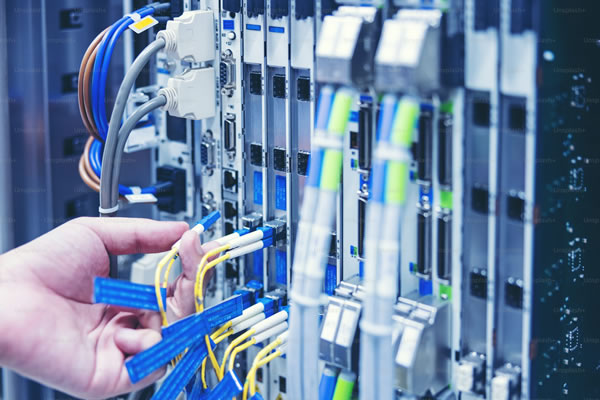
interface and connection management: unify interface specifications, use connectors with reliable quality and ensure fixed installation. all connectors are numbered and file managed, and contact resistance is regularly checked to avoid link performance degradation due to poor contact.
parallel strategy for optical cables and copper cables: avoid laying long sections of optical cables and high-voltage copper cables in parallel during design. when necessary, maintain a minimum safe distance and add shielding or metal isolation. single-mode optical fibers are preferred to improve anti-interference capabilities and transmission stability.
heat dissipation and space management: reasonably arrange the spacing between cabinets and ventilation aisles to ensure that brackets and wire troughs do not impede airflow. use thermal isolation and thermal management strategies for high-density wiring areas to prevent high temperatures from affecting insulation and transmission performance.
operation, maintenance and monitoring: establish an online monitoring and alarm system, implement regular inspections, archive wiring and save test records, and formulate maintenance cycles based on sla requirements to ensure that deutsche telekom's computer room line wiring and interference protection measures continue to be effective.
summary and suggestions: three suggestions are put forward based on field cases: first, strengthen preliminary investigation and zoning design; second, give priority to optical transmission and improve grounding and shielding; third, establish continuous monitoring and documented operation and maintenance processes to ensure long-term stable and compliant operation of the computer room.
- Latest articles
- Risk Control Strategy Research: Methods To Prevent Blacklisting And Abnormal Behavior From Korean Dynamic Native IPs
- A Detailed Explanation Of The Price Range For Different Bandwidth And Configuration Costs For Hosting Servers In The US
- How To Assess The Long-term Service Stability Of Hong Kong Aide's Data Center
- How To Leverage Indian VPS And Thai VPS To Achieve Global User Distribution And Accelerate Deployment
- How To Assess The Quality Of Third-party VPS Management Services In Hong Kong Through SLAs
- Research On Improving The Accuracy Of Vietnamese Native IP In Mobile Advertising Targeting
- The Low-latency Connection Strategy Helps Malaysian Cloud Servers Provide A Better Experience For Asia-Pacific Users
- High-availability Architecture Design For US High-defense Servers And Card Games From An Operations And Maintenance Perspective
- From Bandwidth To Hard Drive Read/write Metrics, It Is Crucial To Assess The Impact Of Cambodia's Junk Servers On Business
- A Guide To Leasing Server Vendors For Small And Medium-sized Enterprises In Vietnam, Evaluating Cost-effectiveness And Scalability
- Popular tags
-
The History Of The Telegraph Machine Room And The Evolution Of Wiring In The German Machine Room
this article explores the history of the telegraph machine room and the evolution of german machine room wiring, and analyzes its impact on modern communication technology. -

-

German Machine Room Technology And Intelligent Operation And Maintenance Are Combined To Achieve Predictive Maintenance Implementation Methods
this article explains the implementation method of german computer room technology and intelligent operation and maintenance to achieve predictive maintenance, covering computer room design characteristics, data collection, algorithm implementation, operation and maintenance process and implementation points, and is suitable for data center and critical infrastructure operation and maintenance teams.